 admin
admin 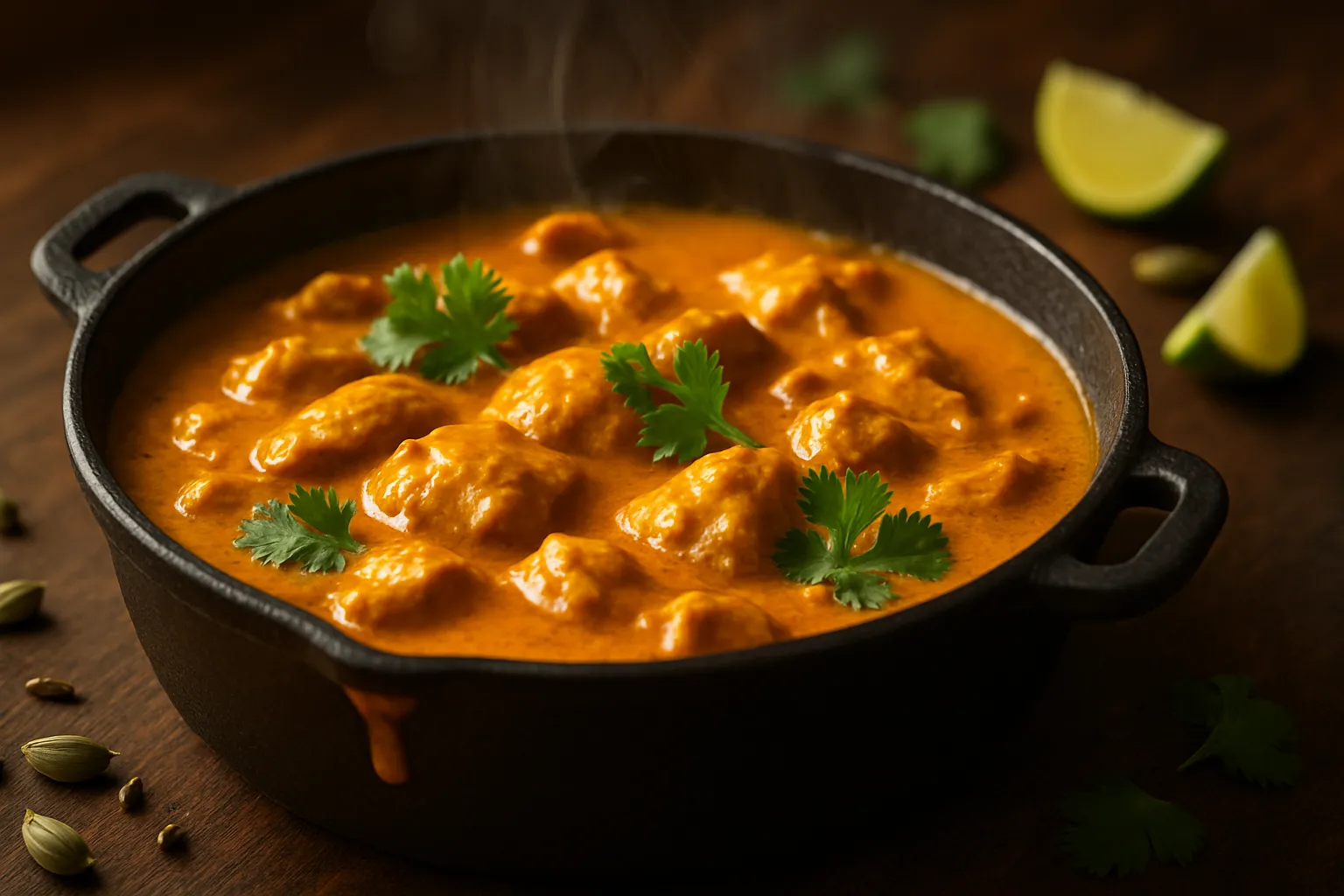
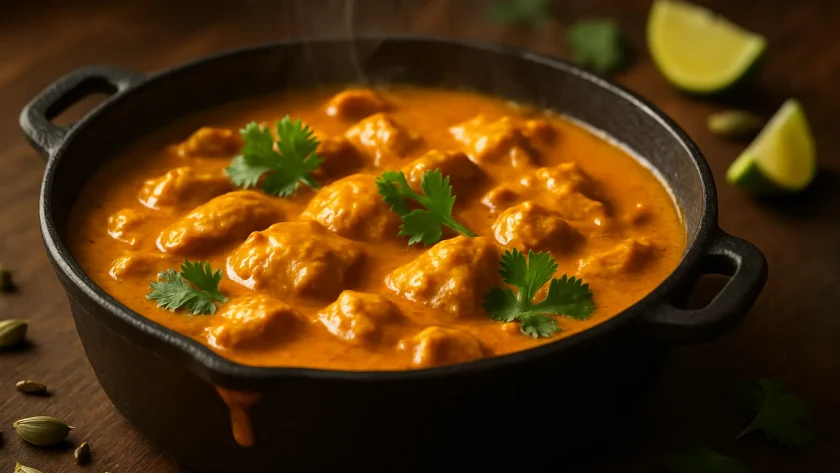
Chicken curry is one of the world's most beloved comfort foods, bringing together aromatic spices, tender chicken, and a rich, creamy sauce that wraps around every bite. Whether you're drawn to the vibrant flavors of Indian masala, the coconut-kissed Thai versions, or the mild sweetness of Japanese curry, this dish offers endless possibilities for customization and exploration.
The beauty of chicken curry lies in its accessibility—you don't need exotic ingredients or hours of cooking time to create restaurant-quality results at home. With spices readily available in Italian supermarkets and a straightforward cooking method, you can have a fragrant, satisfying curry on the table in just 30 minutes.
This recipe guides you through building layers of flavor from the ground up: toasting spices to release their essential oils, creating a silky sauce base, and cooking chicken to perfect tenderness. We'll also share Italian-friendly substitutions, wine pairing suggestions, and meal prep strategies so you can enjoy this warming dish throughout the week.
Ingredients
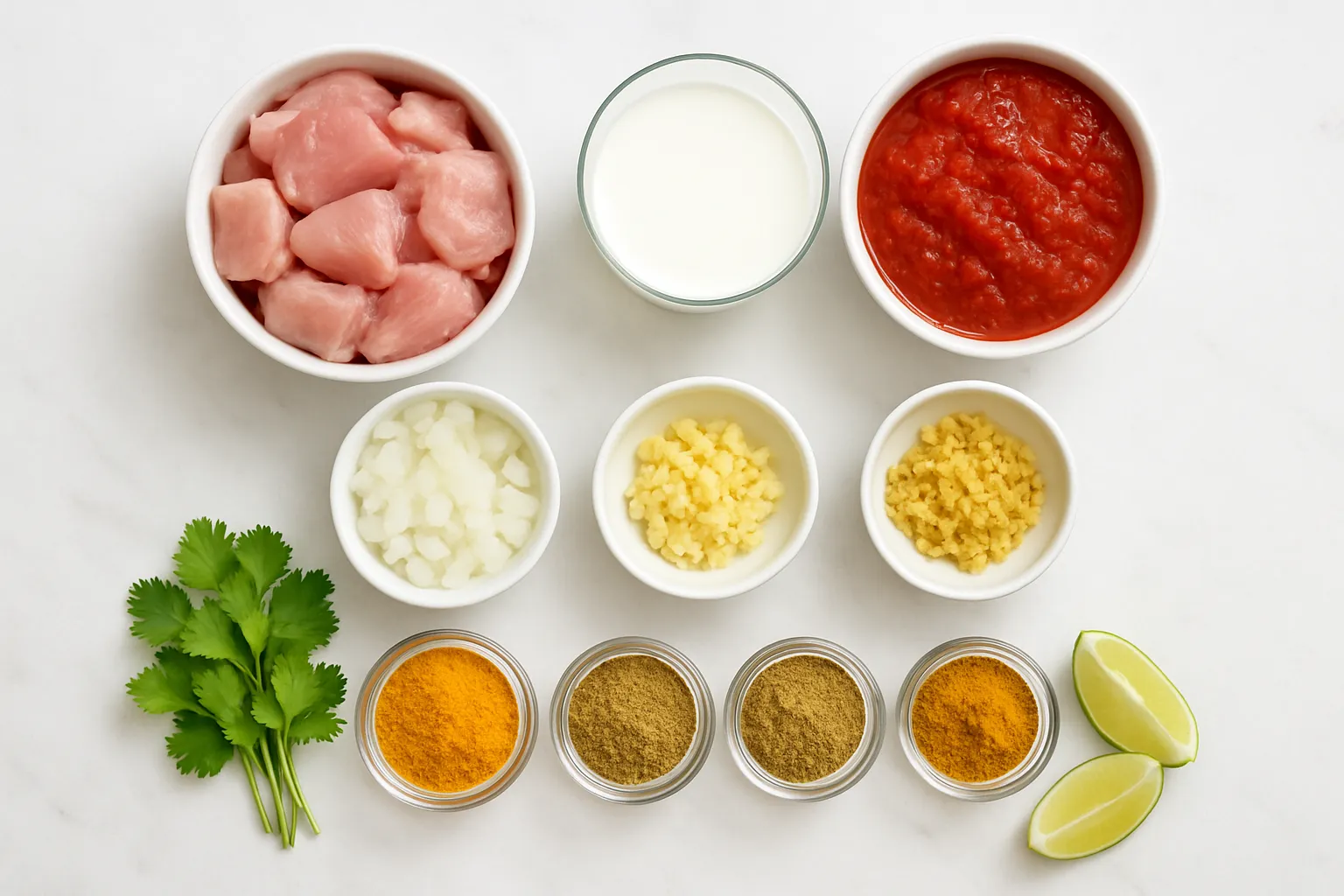
- 600g boneless chicken thighs cut into bite-sized pieces; chicken breast can be substituted
- 1 large onion finely chopped
- 4 garlic cloves minced
- 2 tablespoons fresh ginger grated or finely minced
- 400ml coconut milk full-fat for creamier texture
- 200g crushed tomatoes or passata
- 2 tablespoons curry powder or garam masala adjust to taste
- 1 teaspoon ground cumin
- 1 teaspoon ground coriander
- 1/2 teaspoon turmeric powder
- 2 tablespoons vegetable oil or ghee for richer flavor
- to taste salt
- handful fresh cilantro for garnish
- 1 lime or lemon cut into wedges for serving
Instructions
- Heat the oil in a large, deep skillet or heavy-bottomed pot over medium heat. Add the chopped onion and sauté for 5-6 minutes until softened and golden at the edges. Stir in the minced garlic and grated ginger, cooking for another minute until fragrant.
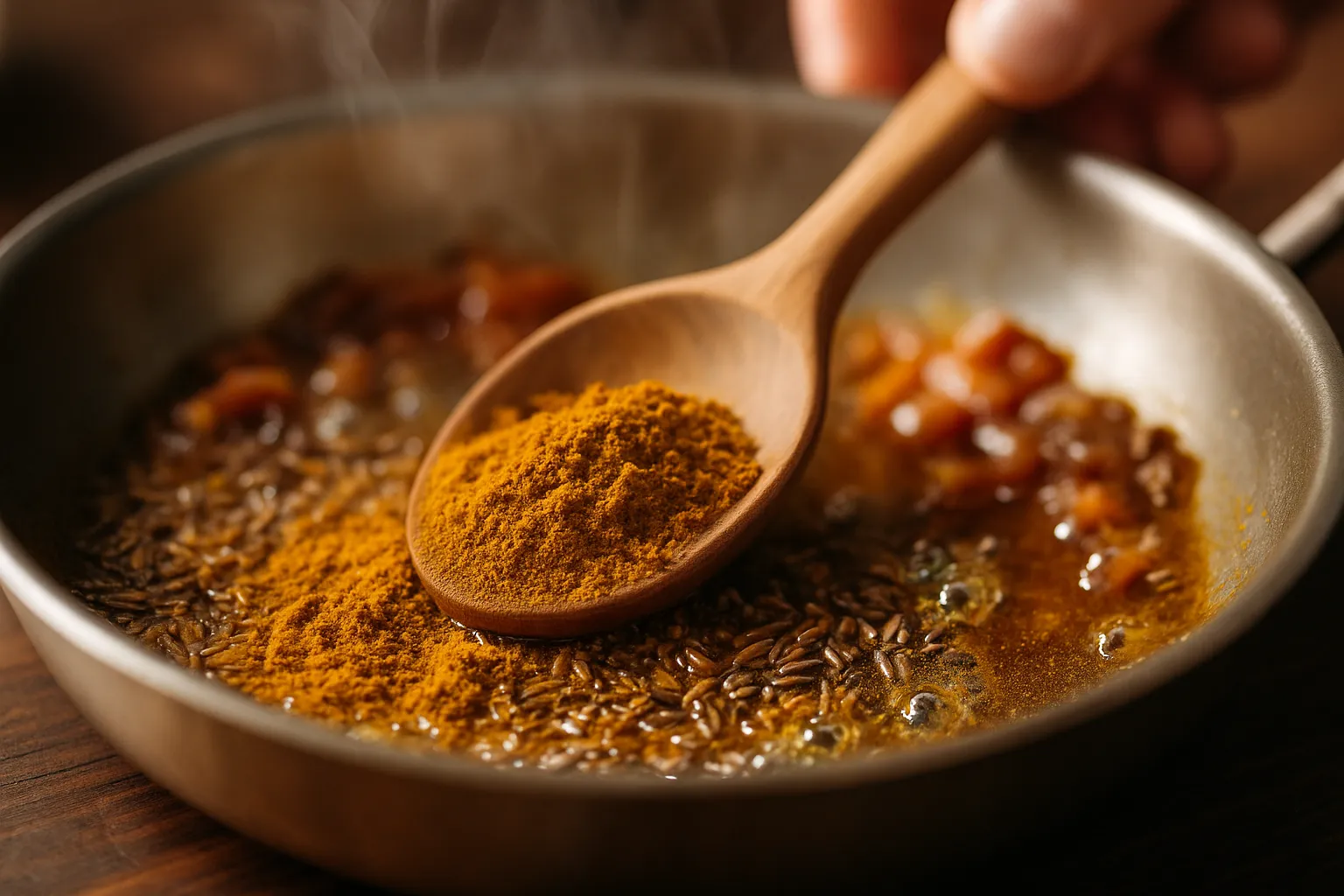
- Add the ground cumin, coriander, turmeric, and curry powder (or garam masala) to the pan. Toast the spices for 30-60 seconds, stirring constantly, until they become aromatic and slightly darker in color. This blooming step releases essential oils and deepens the flavor.
- Add the chicken pieces to the pan and stir to coat them thoroughly with the spice mixture. Cook for 3-4 minutes, turning occasionally, until the chicken is lightly browned on the outside but not fully cooked through.
- Pour in the crushed tomatoes and coconut milk, stirring well to combine. Bring the mixture to a gentle simmer, then reduce the heat to medium-low. Season with salt to taste.
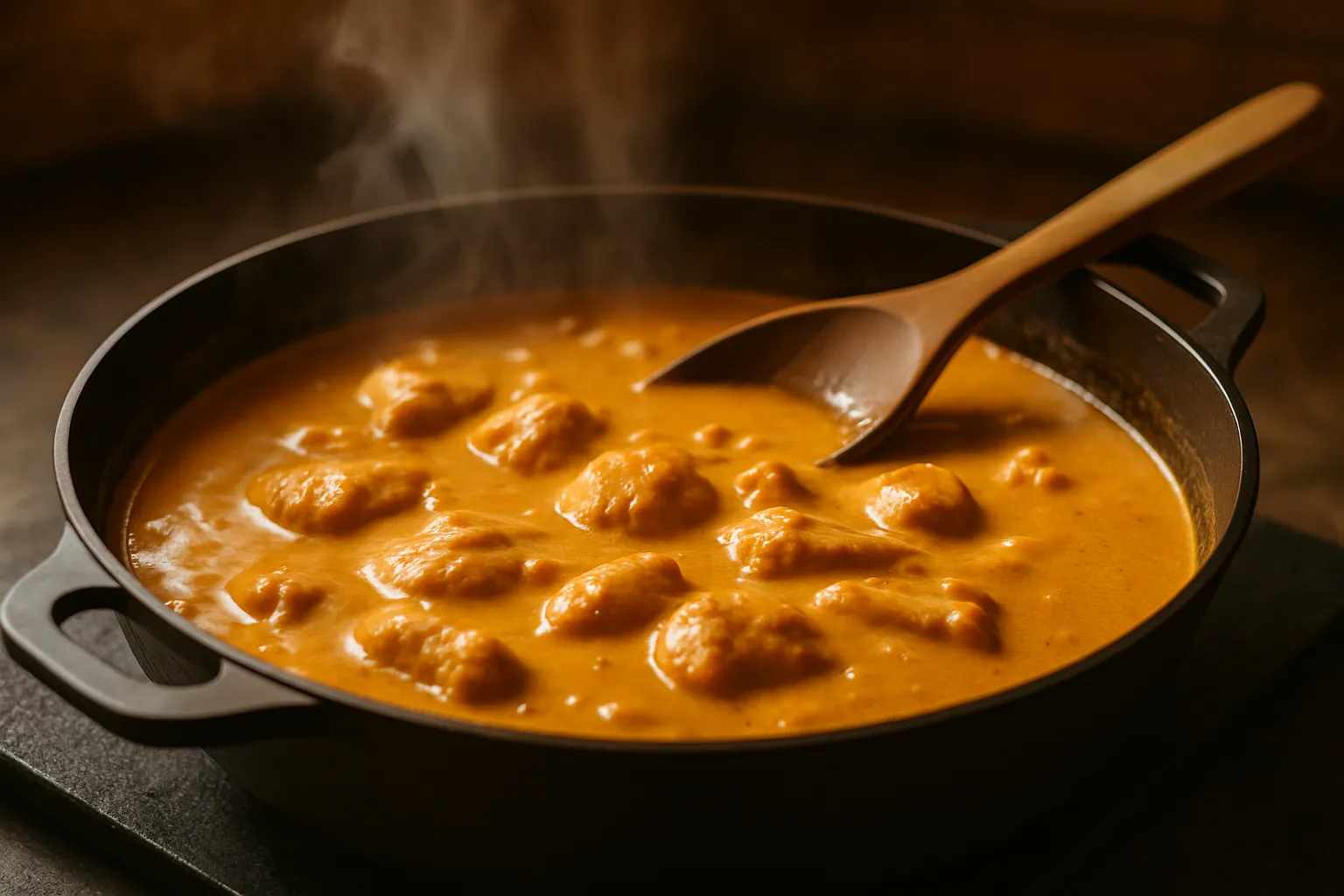
- Cover the pan partially and let the curry simmer for 15-18 minutes, stirring occasionally, until the chicken is cooked through (internal temperature of 75°C) and the sauce has thickened to your desired consistency. If the sauce becomes too thick, add a splash of water or chicken stock.
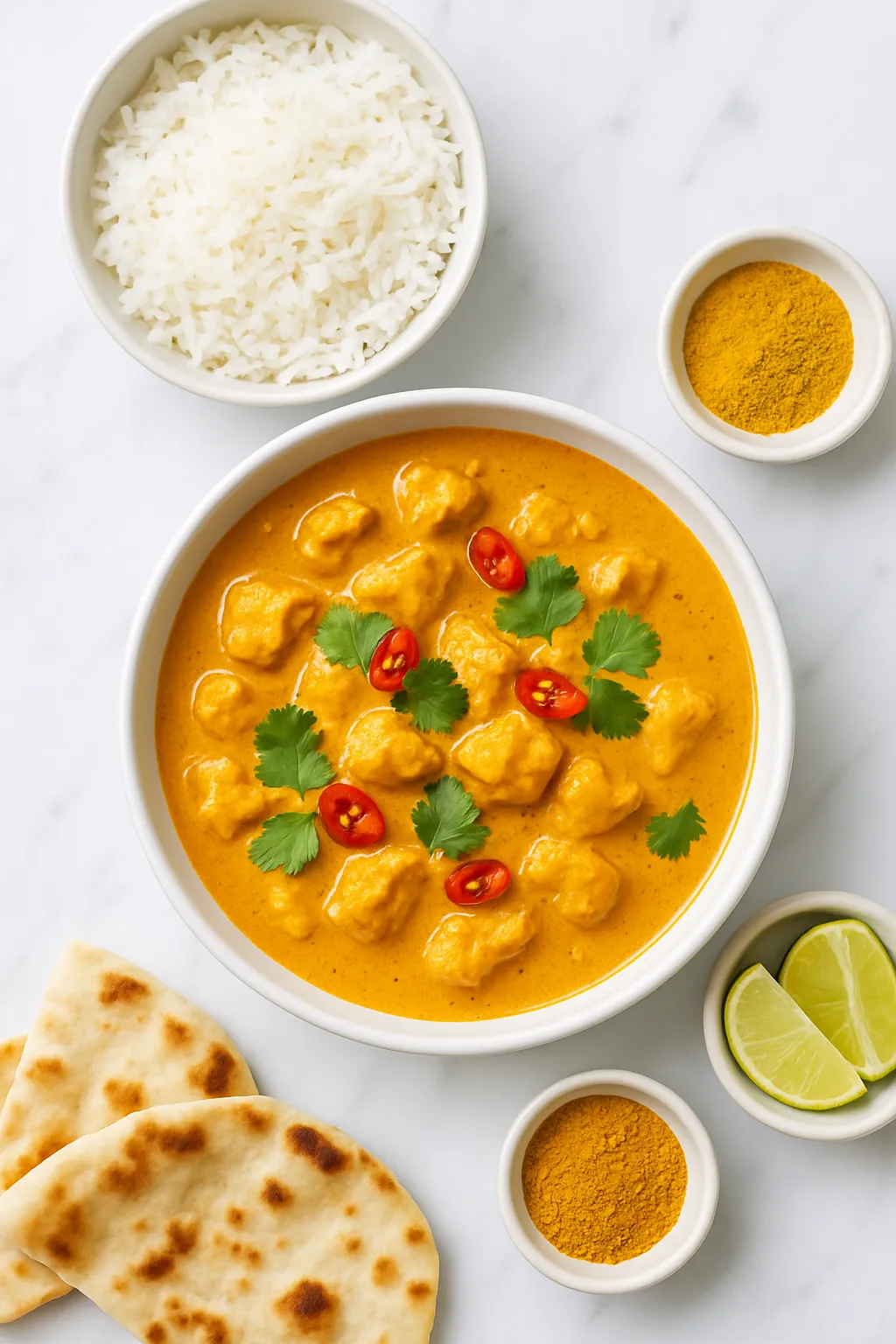
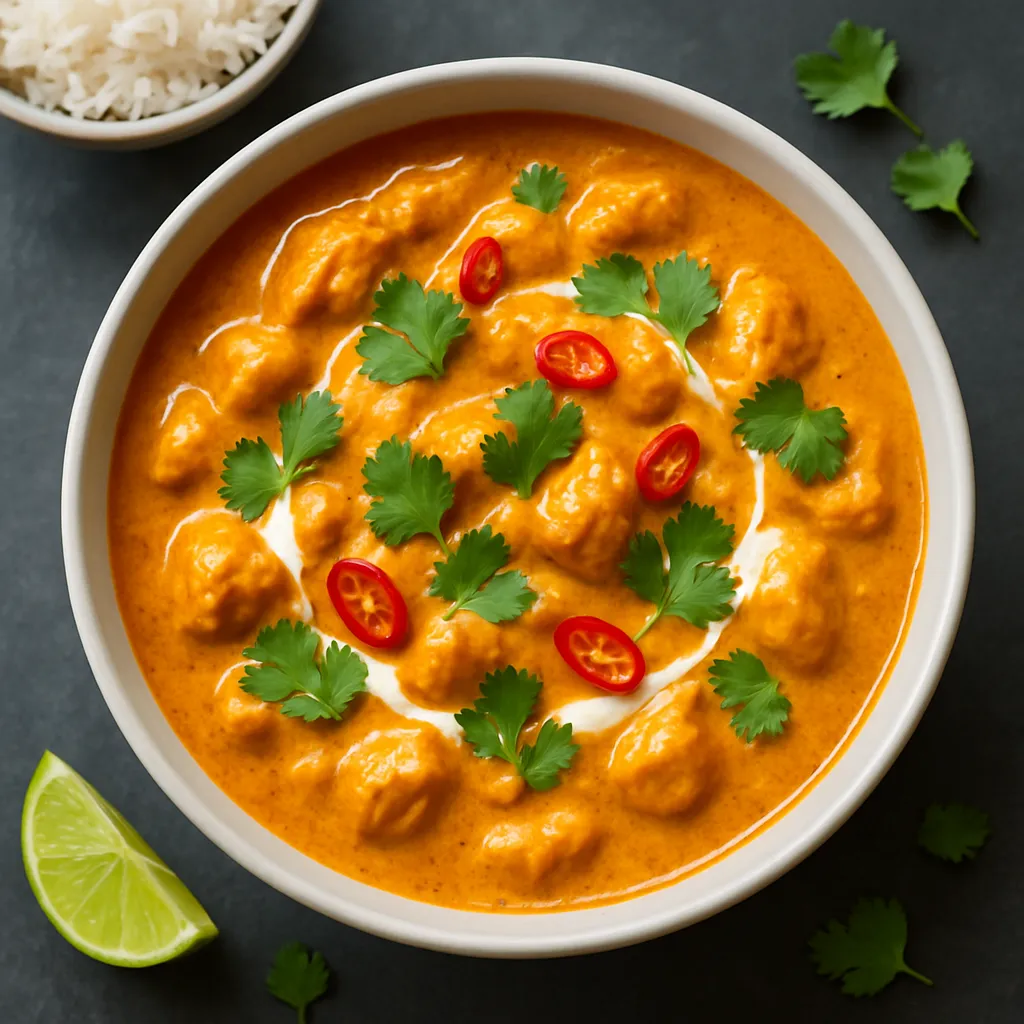
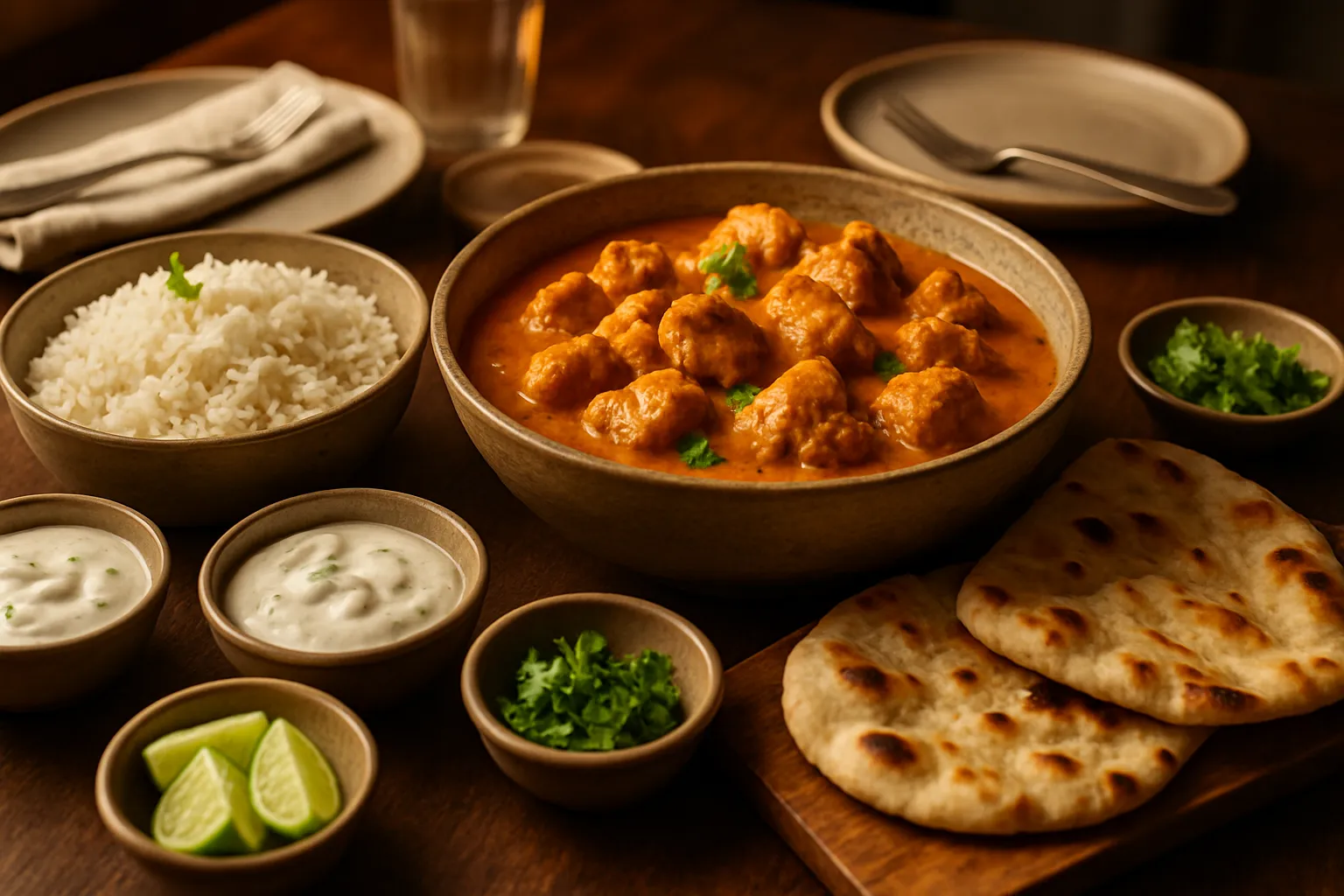
- Taste and adjust seasoning with additional salt, spices, or a squeeze of lime juice for brightness. Garnish with fresh cilantro and serve hot with basmati rice, naan, or your favorite accompaniment.
Chef’s Tips
- Toast whole spices (cumin seeds, coriander seeds) in a dry pan before grinding for maximum aroma and depth of flavor.
- Marinate the chicken in yogurt and spices for 30 minutes to 2 hours before cooking for extra tenderness and flavor penetration.
- Use chicken thighs instead of breast meat—they stay juicier and more flavorful during the simmering process.
- Add a tablespoon of tomato paste along with the crushed tomatoes for richer color and umami depth.
- Finish the curry with a small knob of butter or a drizzle of cream for restaurant-style richness and glossy texture.
Common Mistakes to Avoid
- Skipping the spice blooming step—raw spices taste harsh and bitter; toasting them in oil unlocks their full aromatic potential.
- Using low-fat coconut milk or yogurt, which can split or curdle when simmered; always opt for full-fat versions for a stable, creamy sauce.
- Overcooking chicken breast, leading to dry, stringy meat; monitor cooking time closely or switch to thighs for more forgiving results.
- Adding too much liquid at once—build the sauce gradually and simmer uncovered if it's too thin, allowing excess moisture to evaporate.
- Not tasting and adjusting seasoning at the end; curry flavors meld and mellow as they cook, so final seasoning is essential for balance.
Variations
- Thai-Style Chicken Curry: Replace garam masala with Thai red or green curry paste, add fish sauce, and finish with Thai basil and lime.
- Butter Chicken (Murgh Makhani): Add heavy cream, butter, and a touch of honey or sugar for a sweeter, richer North Indian version.
- Vegan Chickpea Curry: Swap chicken for cooked chickpeas or cubed firm tofu, and use vegetable stock to adjust consistency.
- Japanese-Style Curry: Use Japanese curry roux blocks (available in specialty stores), add potatoes and carrots, and serve over short-grain rice.
- Low-Carb Keto Curry: Skip the tomatoes, use extra coconut cream, and serve over cauliflower rice or zucchini noodles.
Storage
Store leftover chicken curry in an airtight container in the refrigerator for up to 4 days. The flavors often deepen and improve overnight. For freezing, portion the cooled curry into freezer-safe containers or bags, leaving some headspace for expansion, and freeze for up to 3 months. Thaw overnight in the refrigerator before reheating. Reheat gently on the stovetop over low heat, stirring occasionally and adding a splash of water or coconut milk if the sauce has thickened. Avoid microwaving at high power, which can toughen the chicken; use medium power in short intervals instead.
Frequently Asked Questions
Can I make chicken curry without coconut milk?
Absolutely. Substitute coconut milk with full-fat Greek yogurt, heavy cream, or a combination of tomato puree and chicken stock for a lighter, tangier sauce. Stir yogurt in off the heat to prevent curdling.
How do I thicken chicken curry sauce?
Simmer the curry uncovered for a few extra minutes to reduce excess liquid. Alternatively, stir in a tablespoon of tomato paste, ground cashews, or a slurry of cornstarch mixed with water.
What rice is best for chicken curry?
Basmati rice is the classic choice for its fragrant, fluffy grains that don't clump. Jasmine rice works well for Thai-style curries, while short-grain Japanese rice suits milder, sweeter curry varieties.
Can I use chicken breast instead of thighs?
Yes, but reduce the cooking time by 3-5 minutes to prevent drying out. Chicken thighs are more forgiving and stay juicier, making them ideal for simmered dishes like curry.
What spices are essential and which are optional?
Essential spices are cumin, coriander, turmeric, and garam masala (or curry powder). Optional additions include cardamom, cinnamon, fenugreek, and chili powder for extra complexity and heat.
How long does chicken curry last in the fridge?
Properly stored in an airtight container, chicken curry will keep for up to 4 days in the refrigerator. Always reheat to steaming hot (75°C internal temperature) before serving.