 admin
admin 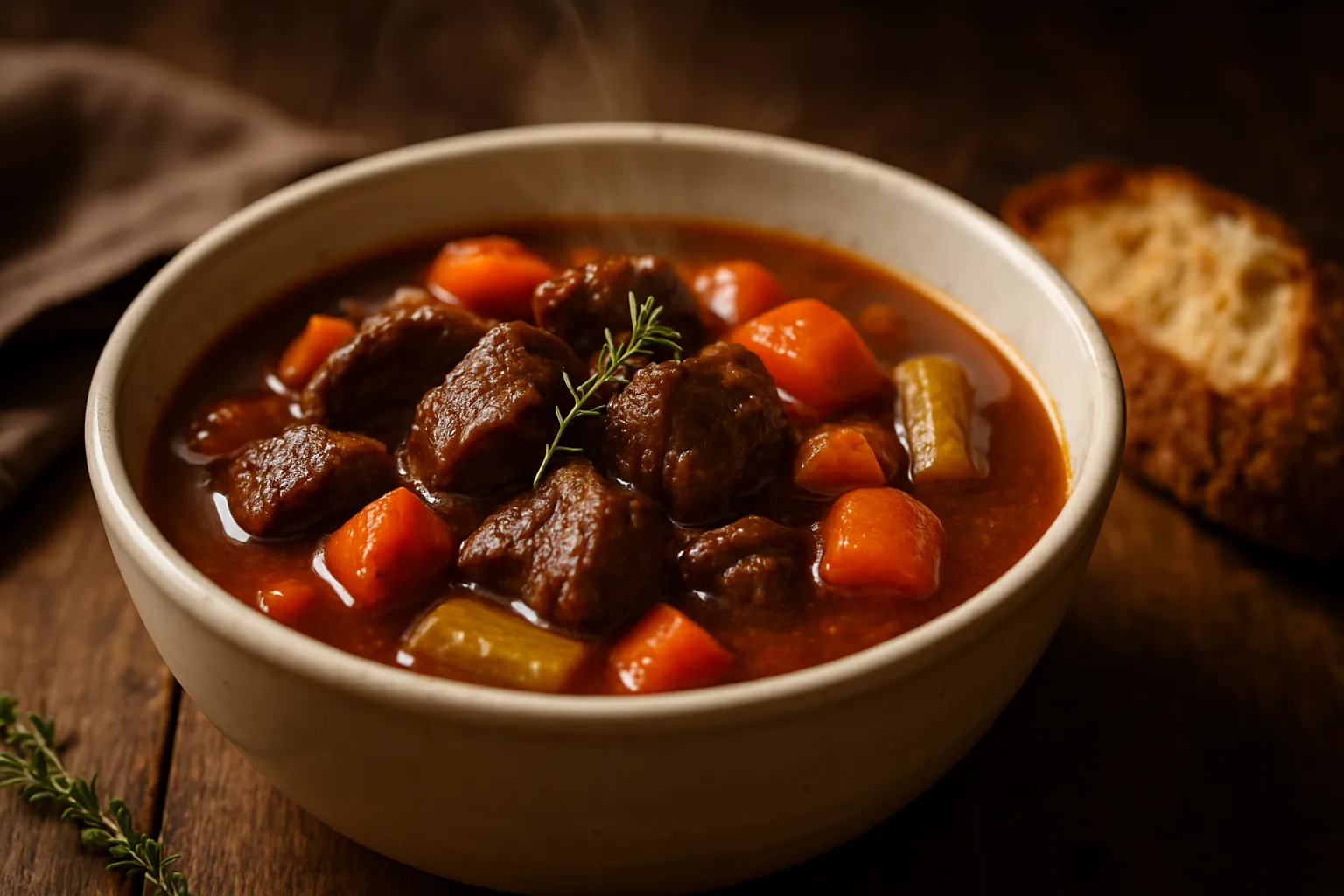
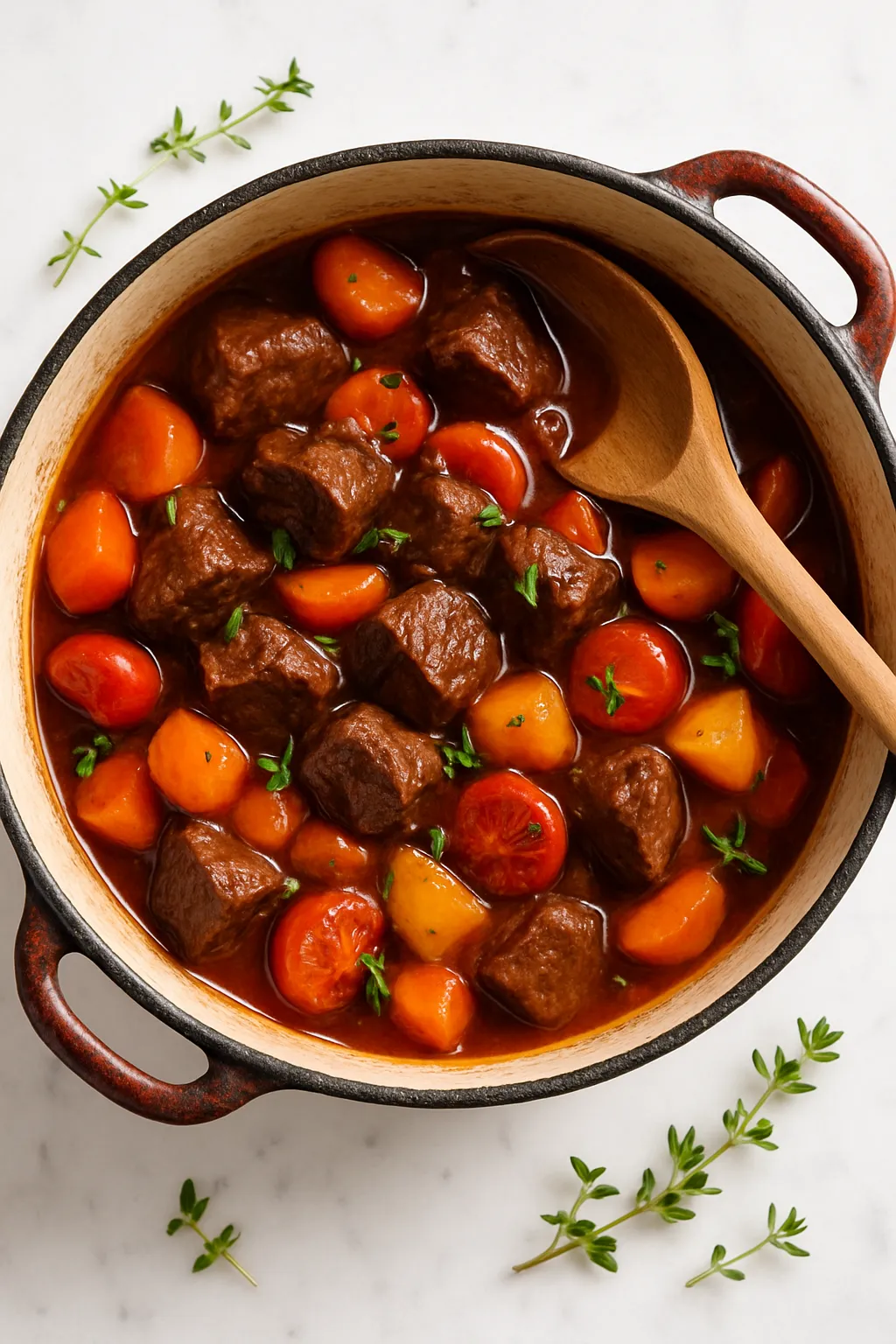
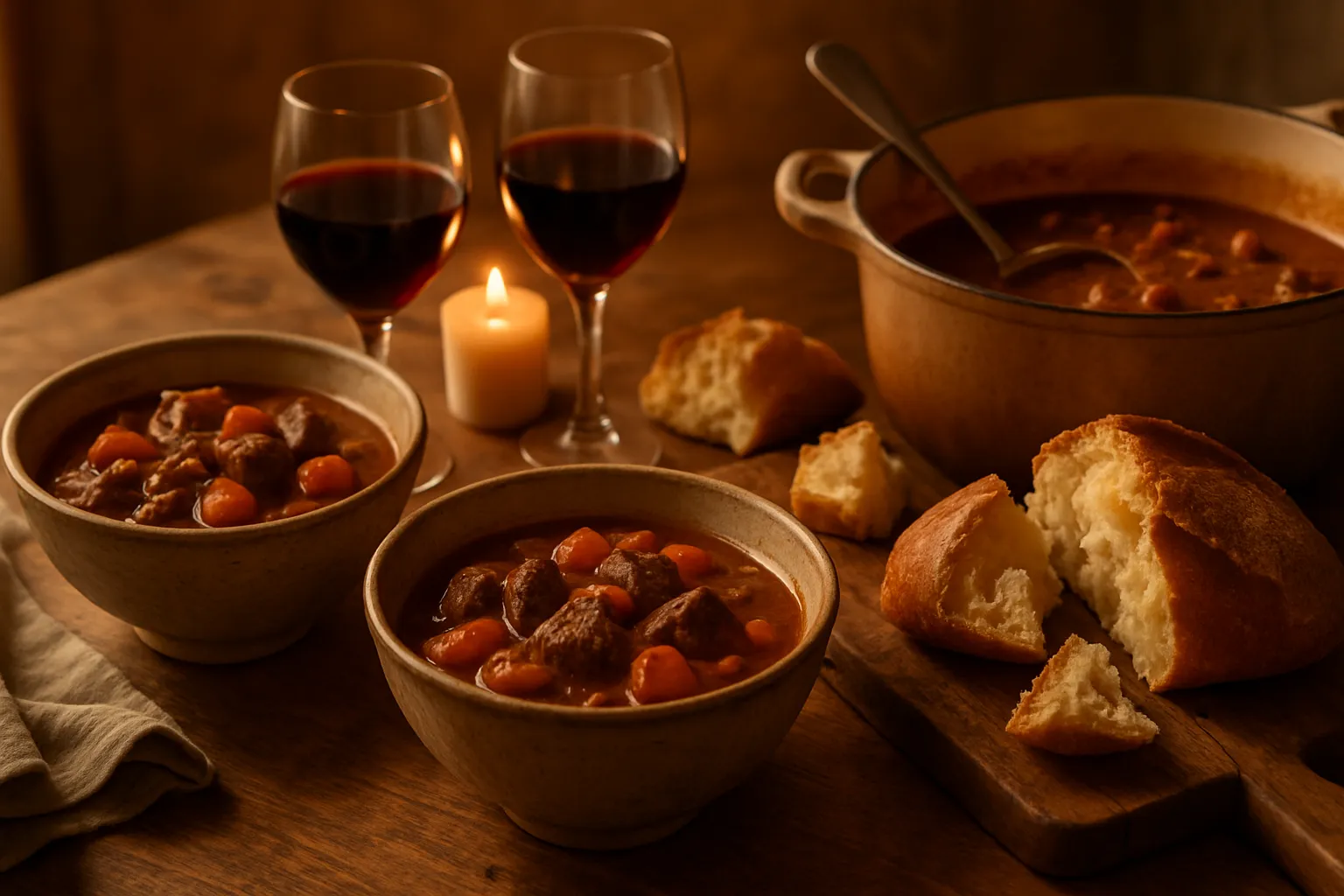
Beef stew is the ultimate comfort food—a one-pot wonder that transforms humble ingredients into a soul-warming meal. With tender chunks of beef, a rich wine-infused gravy, and hearty vegetables, this classic dish has graced tables across cultures for centuries. From French boeuf bourguignon to Italian stufato, every tradition brings its own twist to this timeless recipe.
The secret to exceptional beef stew lies in patience and technique. Properly seared meat, aromatic vegetables, and slow simmering create layers of deep, savory flavor that only improve with time. Whether you're cooking on the stovetop, in the oven, or using a slow cooker, the result is always the same: fall-apart tender beef in a velvety, flavorful sauce.
This recipe honors the Italian stufato tradition with a splash of good red wine, fresh herbs, and a focus on quality ingredients. Perfect for chilly evenings, Sunday dinners, or meal prep, beef stew is a dish that brings warmth and satisfaction to every spoonful.
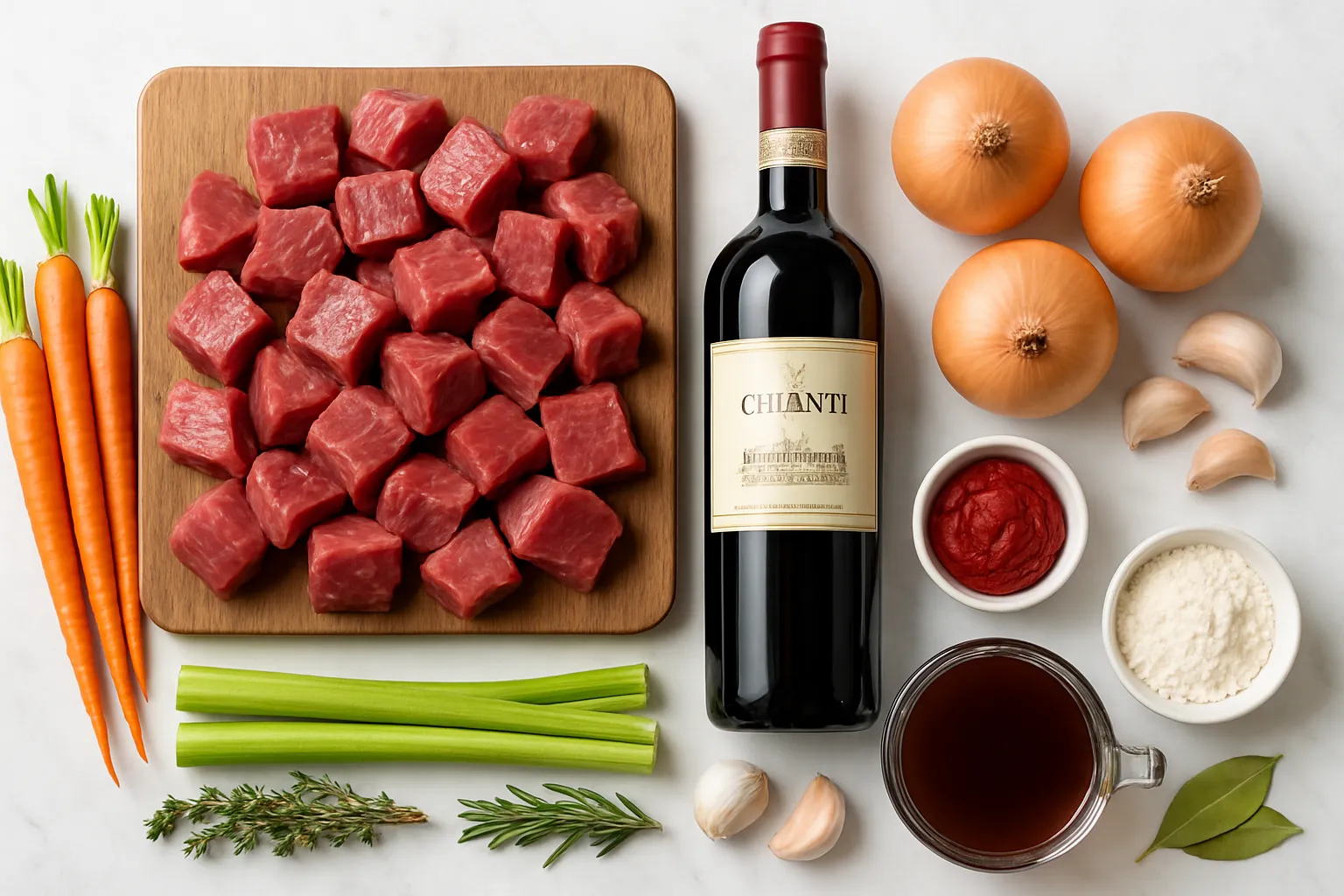
Ingredients
- 1 kg beef chuck cut into 4 cm cubes
- 3 tablespoons olive oil for searing
- 2 medium onions diced
- 3 large carrots peeled and cut into chunks
- 2 celery stalks chopped
- 4 garlic cloves minced
- 2 tablespoons tomato paste
- 300 ml red wine Chianti, Barbera, or Sangiovese
- 750 ml beef stock low-sodium preferred
- 2 bay leaves
- 4 sprigs fresh thyme or 1 teaspoon dried
- 1 sprig fresh rosemary
- 2 tablespoons all-purpose flour for coating beef
- to taste salt and black pepper
Instructions
- Pat the beef cubes dry with paper towels and season generously with salt and black pepper. Toss the beef with flour until evenly coated, shaking off any excess.
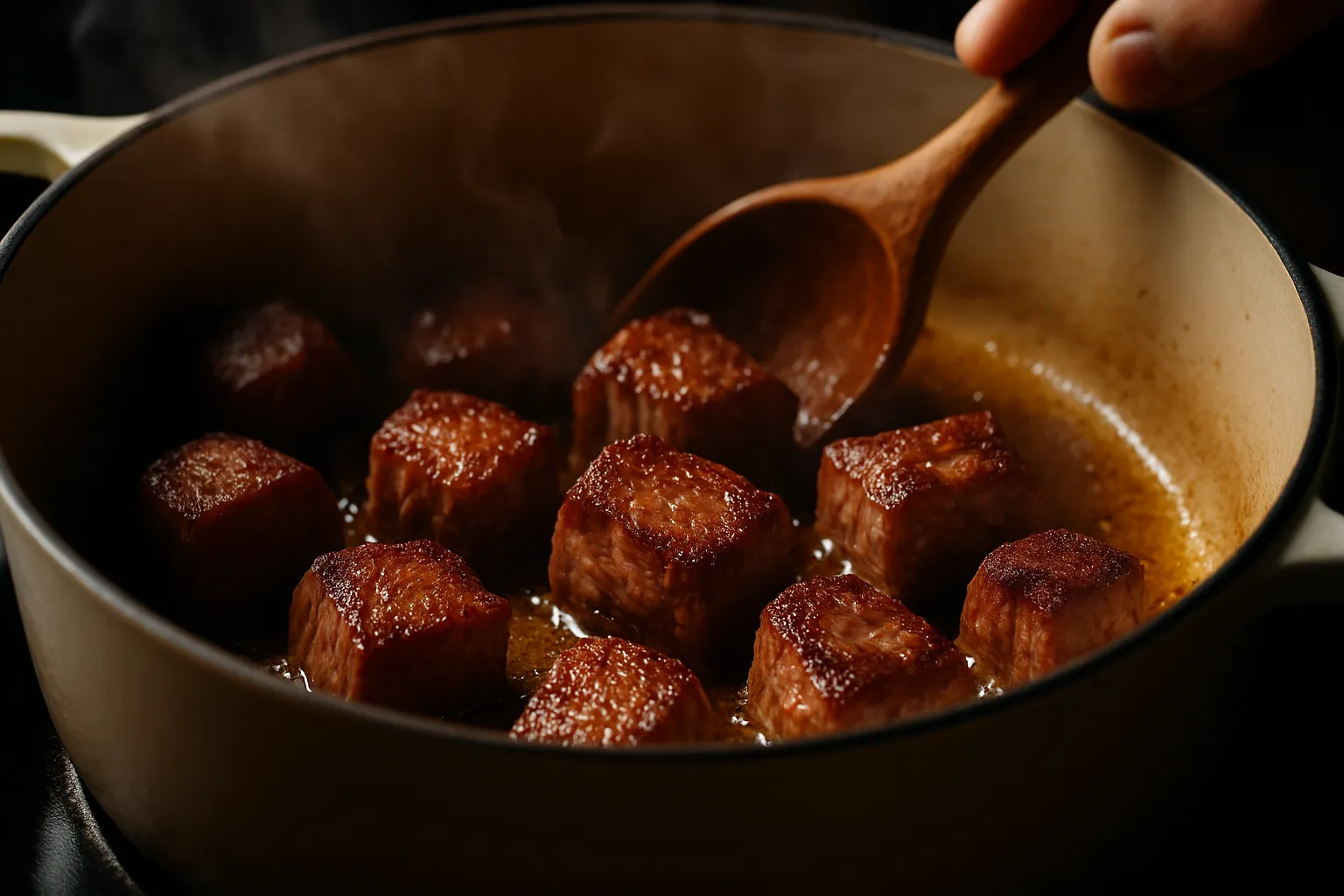
- Heat 2 tablespoons of olive oil in a large, heavy-bottomed pot or Dutch oven over medium-high heat. Working in batches to avoid overcrowding, sear the beef cubes on all sides until deeply browned, about 3-4 minutes per batch. Transfer the browned meat to a plate and set aside.
- Add the remaining tablespoon of olive oil to the pot. Sauté the onions, carrots, and celery over medium heat for 5-6 minutes until softened. Add the garlic and tomato paste, stirring for 1-2 minutes until fragrant and the paste darkens slightly.
- Pour in the red wine, scraping up any browned bits from the bottom of the pot with a wooden spoon (this is where the flavor lives). Let the wine simmer for 3-4 minutes to reduce slightly and cook off the alcohol.
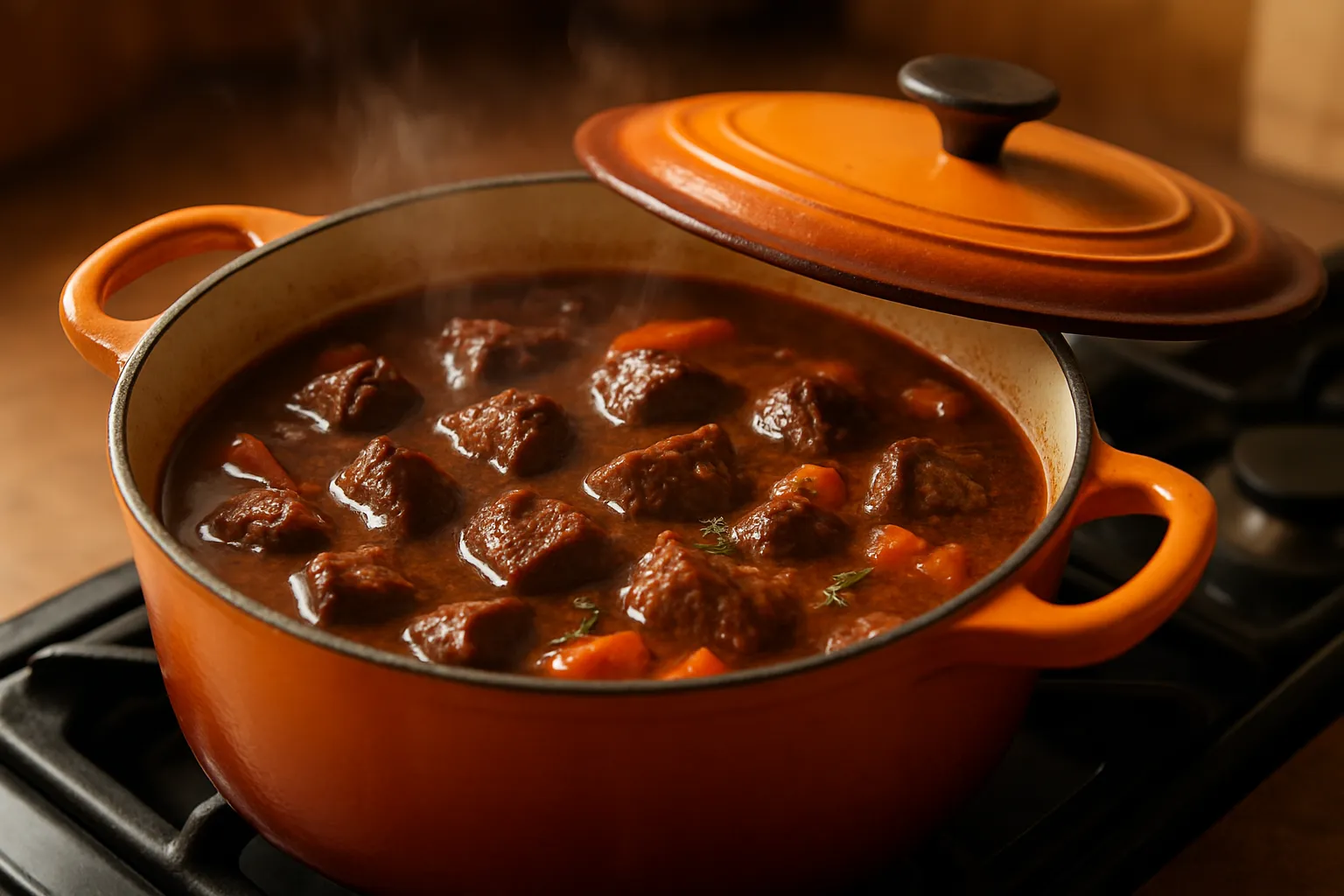
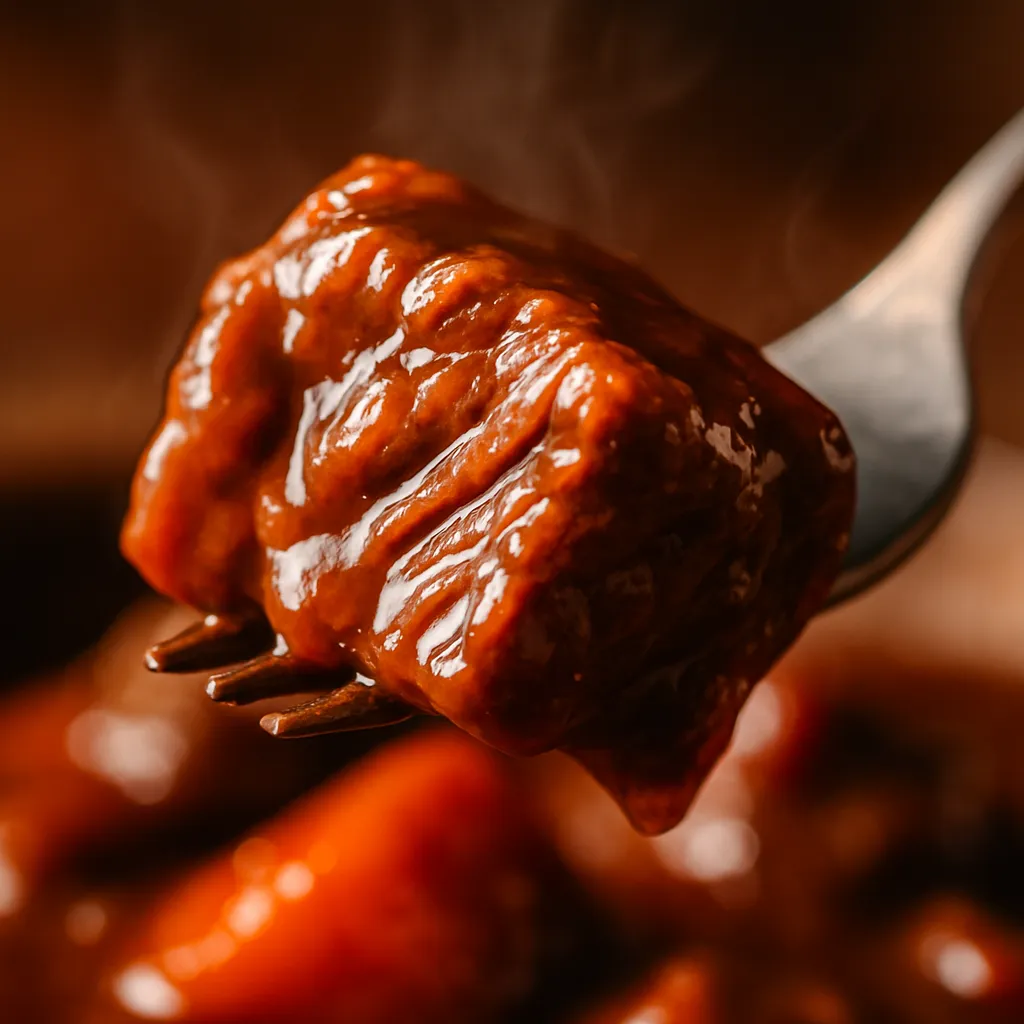
- Return the seared beef and any accumulated juices to the pot. Add the beef stock, bay leaves, thyme, and rosemary. Bring to a gentle boil, then reduce the heat to low. Cover with the lid slightly ajar and simmer for 2 to 2.5 hours, stirring occasionally, until the beef is fork-tender and the sauce has thickened.
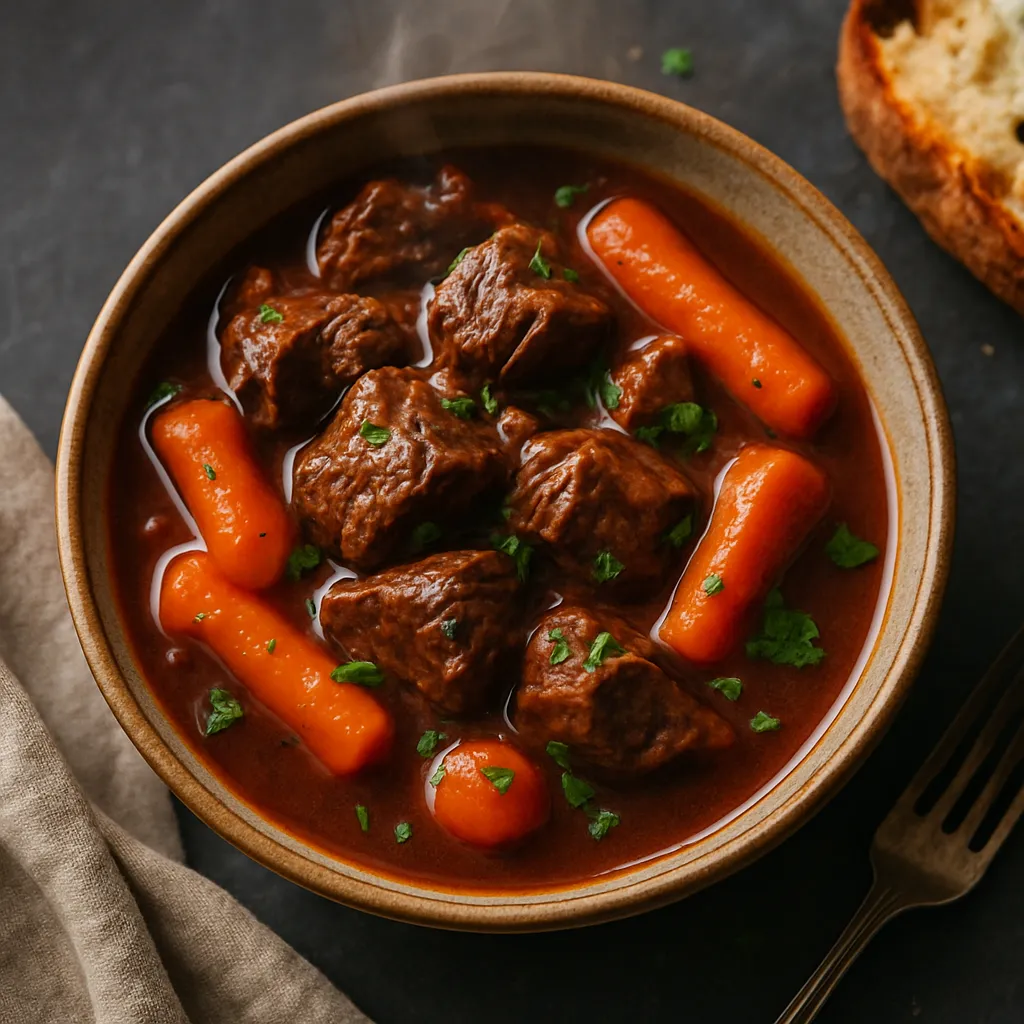
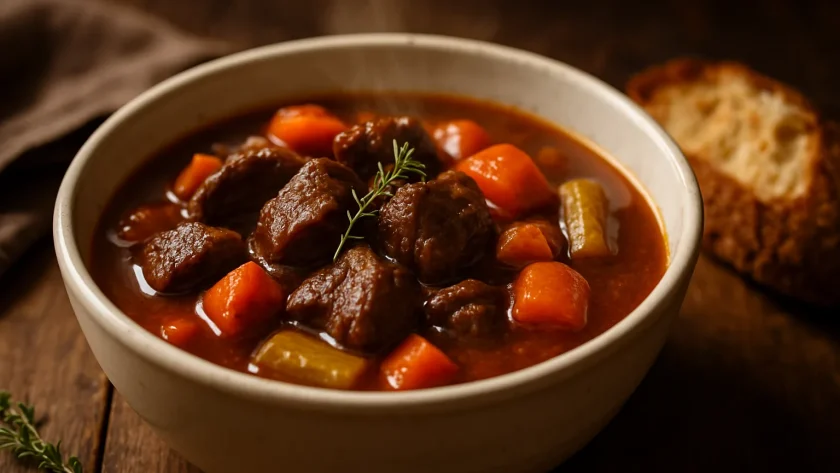
- Taste and adjust seasoning with additional salt and pepper as needed. Remove the bay leaves and herb sprigs before serving. Ladle the stew into bowls and garnish with fresh parsley or a sprinkle of grated Parmigiano-Reggiano if desired.
Chef’s Tips
- Don't skip the browning step—searing the beef creates a deep, caramelized crust that forms the flavor foundation of your stew through the Maillard reaction.
- Add heartier vegetables like potatoes or parsnips in the last 45 minutes of cooking to prevent them from turning mushy.
- For a naturally thickened sauce, let the stew simmer uncovered for the final 20-30 minutes to reduce the liquid. Alternatively, make a slurry with 1 tablespoon cornstarch and 2 tablespoons cold water.
- Beef stew tastes even better the next day as the flavors meld and deepen overnight in the refrigerator.
- Use a good-quality Italian red wine that you'd enjoy drinking—Chianti, Barbera, or Sangiovese add authentic depth and complexity.
Common Mistakes to Avoid
- Boiling instead of simmering: High heat makes the meat tough and stringy. Always maintain a gentle simmer with small bubbles breaking the surface.
- Overcrowding the pan when searing: This steams the meat instead of browning it. Work in batches and give each piece space to develop a proper crust.
- Adding all vegetables at once: Delicate vegetables like peas or mushrooms should go in during the last 20-30 minutes to avoid turning to mush.
- Using lean cuts of beef: Stew needs marbling and connective tissue (like chuck or brisket) to become tender and flavorful during long cooking.
- Not deglazing properly: Those browned bits stuck to the bottom of the pot are pure flavor—scrape them up with wine or stock to incorporate into the sauce.
Variations
- Italian Stufato: Add a Parmigiano-Reggiano rind during simmering for extra umami depth, and finish with a gremolata of lemon zest, garlic, and parsley.
- Slow Cooker Method: After browning the meat and sautéing aromatics, transfer everything to a slow cooker. Cook on low for 6-8 hours or high for 4-5 hours.
- Instant Pot/Pressure Cooker: Use the sauté function for browning, then pressure cook on high for 35-45 minutes with natural release for weeknight convenience.
- Gluten-Free: Skip the flour coating and thicken with potato starch, arrowroot powder, or simply reduce the sauce naturally.
- Add mushrooms, pearl onions, or cubed potatoes in the last hour of cooking for extra heartiness and variety.
Storage
Let the beef stew cool to room temperature, then transfer to airtight containers. Refrigerate for up to 4 days or freeze for up to 3 months. To freeze, portion into freezer-safe containers or heavy-duty freezer bags, leaving some headspace for expansion. Thaw overnight in the refrigerator before reheating. Reheat gently on the stovetop over medium-low heat, stirring occasionally, or in the microwave in 2-minute intervals. Add a splash of beef stock or water if the stew has thickened too much. Leftover stew makes an excellent filling for beef pot pie, can be tossed with pasta, or used as a topping for shepherd's pie.
Frequently Asked Questions
What is the best cut of beef for stew?
Chuck roast is the gold standard for beef stew due to its excellent marbling and connective tissue that breaks down into tender, flavorful meat during slow cooking. Brisket and short rib are also excellent choices for rich, fall-apart texture.
How do you thicken beef stew?
The easiest method is to simmer uncovered for the last 20-30 minutes to reduce the liquid naturally. You can also coat the beef in flour before browning, add a cornstarch slurry (1 tablespoon cornstarch mixed with 2 tablespoons cold water), or mash a few cooked vegetables into the sauce.
Can you make beef stew ahead of time?
Absolutely! Beef stew is ideal for make-ahead meals. The flavors deepen and improve after sitting overnight in the refrigerator. Prepare it 1-2 days in advance, store in an airtight container, and reheat gently before serving.
How long should beef stew simmer?
For stovetop cooking, simmer beef stew for 2 to 2.5 hours at low heat until the meat is fork-tender. In the oven at 160°C, plan for 2.5 to 3 hours. Slow cookers need 6-8 hours on low or 4-5 hours on high, while pressure cookers require just 35-45 minutes.
What vegetables go in beef stew?
Classic beef stew vegetables include onions, carrots, celery, and garlic as aromatics. Potatoes, parsnips, turnips, and mushrooms are popular additions. Add heartier vegetables in the last 45 minutes and delicate ones like peas in the final 15 minutes to prevent overcooking.
Can you freeze beef stew?
Yes, beef stew freezes beautifully for up to 3 months. Cool completely, then portion into freezer-safe containers or bags, leaving headspace for expansion. Thaw overnight in the refrigerator and reheat gently on the stovetop, adding liquid if needed.